Nastia
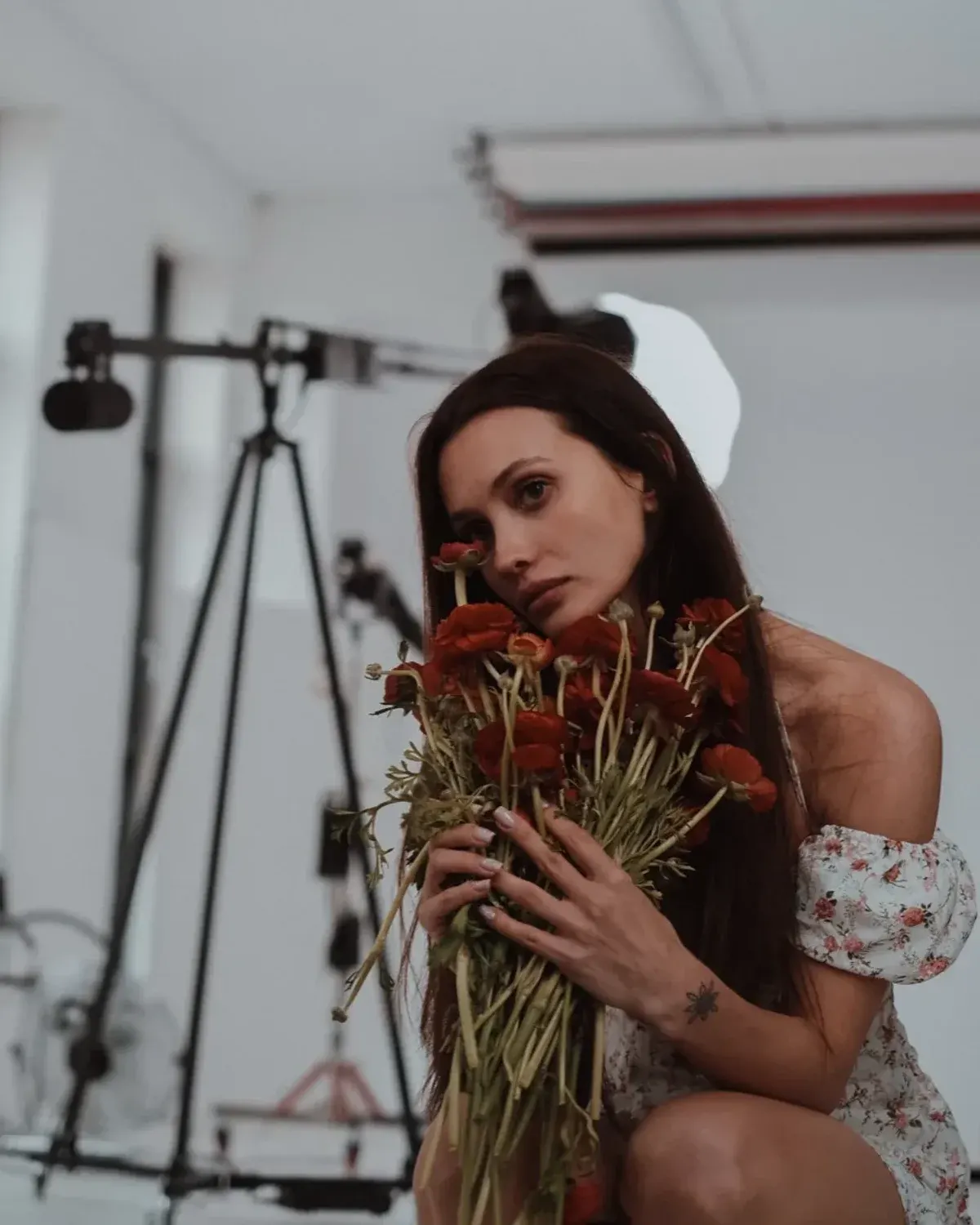
Co-founder and co-owner of the studio
Hi, my name is Nastia. I tattoo in fine line, graphic and micro-realism styles, with a particular love for botanical pieces, soft motifs and delicate linework.
Style: Graphic
Graphic tattoo in Wrocław: bold linework, ornament, mandalas and dotwork shaped to your body. Done by Nastia. Message us your idea on WhatsApp.
Graphic tattoos in Wrocław are done by Nastia. It’s a style of bold line, ornament and dots: mandalas, butterflies, flowers drawn like illustrations, and designs that read like a symbol from a distance and reveal their detail up close.
Graphic tattooing grows out of drawing and printmaking: book illustration, linocut, old engravings and ornament. The shape is built by line and by the contrast of black against skin, not by smooth tonal transitions as in realism. A good graphic tattoo stays legible even from a few meters away.
What sets graphic work apart from fine line is mostly weight. Fine line is a thin, light stroke, while graphic lines can be stronger, with black fills and dotwork, meaning shading made of dots. The two often overlap: a delicate outline can get a graphic ornament, and a botanical composition can get denser, dotted shadows.
Nastia starts a graphic design with composition. First she decides how the design should sit on your body: symmetrical like a mandala on the sternum, or running along an arm. Then she chooses the line weight, which elements should be strong and build the silhouette, and which should be thin and decorative.
Shadow in graphic work is made differently than in realism. Instead of soft blending of tones, it’s built from dots, hatching or solid black. Dotwork gives a grainy, soft effect that looks good in ornaments and flower petals, hatching recalls old engravings, and solid black cuts the motif sharply away from the skin. Nastia sets the proportions between these three tools at the sketch stage, because they decide whether the design feels light or heavy.
An illustrative tattoo often begins with a sheet of paper: a sketch from a notebook, a child’s drawing, an illustration from a favorite book. We gladly work with material like that. Nastia redraws it for skin: she evens out the line, thickens whatever is too thin, simplifies details that could blur together in a tattoo, and fits the composition to the spot on your body.
If your inspiration comes from another artist, we treat it as a starting point for an original design, not as a pattern to copy.
Graphic work looks good on the forearm, upper arm, sternum, shoulder blade, back, calf and thigh. Symmetrical designs work best on places that are symmetrical themselves: the sternum, the nape or along the spine. Vertical compositions feel at home on the forearm and calf.
Size depends on the density of detail. A simple butterfly with ornament can be small, but a mandala with fine dotwork needs space so that dots and lines don’t run together into one blot over time. Nastia will suggest a scale that stays legible years from now.
The first night your tattoo stays under protective pads; in the morning you wash it with lukewarm water and a gentle soap, and then we apply a Second Skin film for 5–7 days. After you remove it, a thin layer of cream 1–2 times a day is enough. Areas filled with black may flake slightly for a few days. Don’t pick at them, even if they itch.
Once it’s healed, protecting it from the sun matters most. The sun takes contrast away from graphic work faster than anything else, so SPF 50+ sunscreen should become a habit. Details are in our aftercare instructions.
Tell us what the tattoo should show, where it goes and how big it should be. Attach references or your own drawing. We’ll reply with a price estimate and the nearest available dates, and a deposit secures your appointment.
Nastia draws an original design and sends it a few days before the session, so there’s time for unhurried revisions. On the day, she applies the stencil and checks how the design sits on your body before she starts tattooing. For 1–2 weeks before your visit, moisturize the skin where the tattoo will go, and for 24 hours before, avoid alcohol and blood-thinning medication.
If you’re thinking about covering an old tattoo, start with our cover-up page.
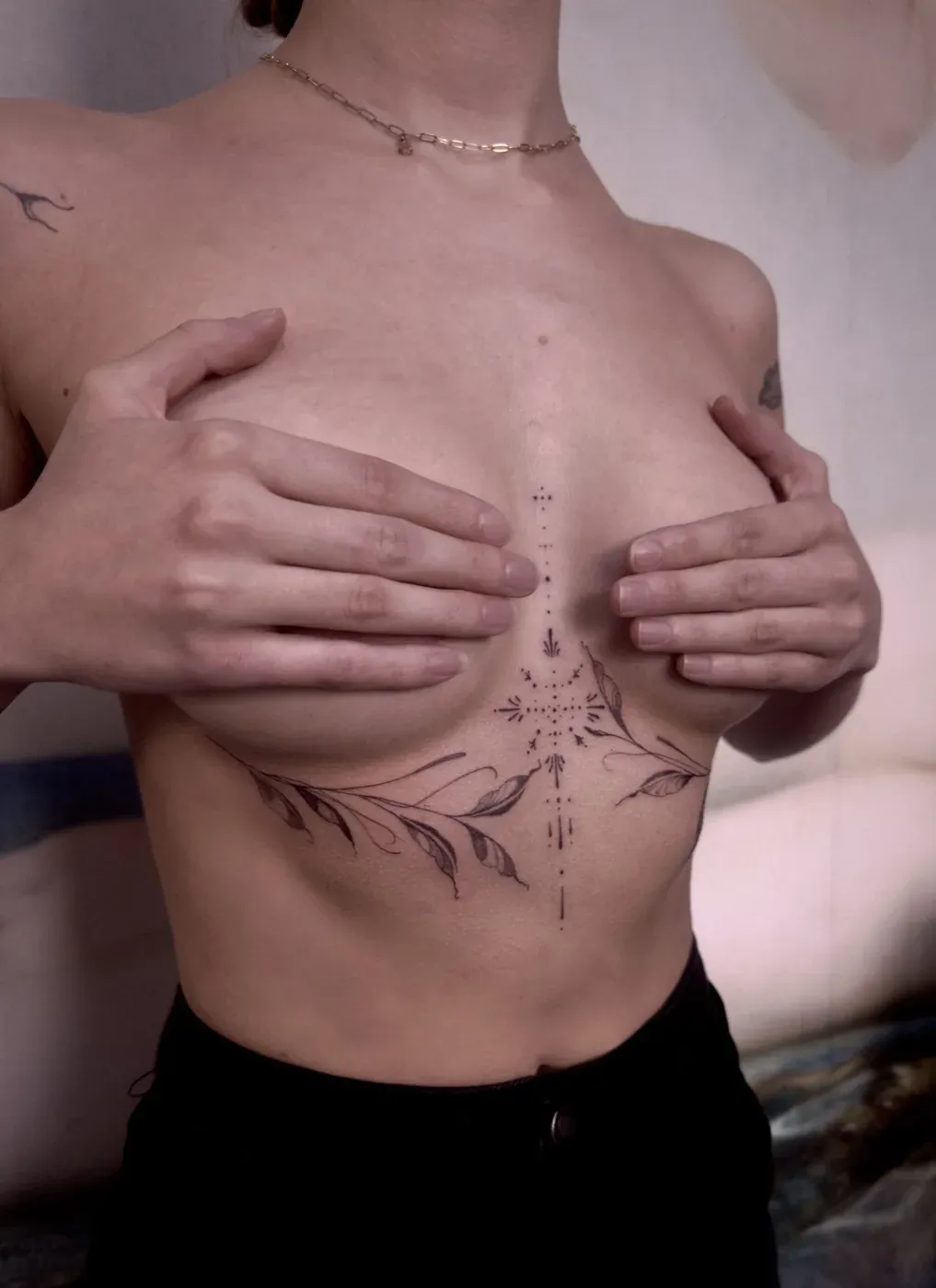
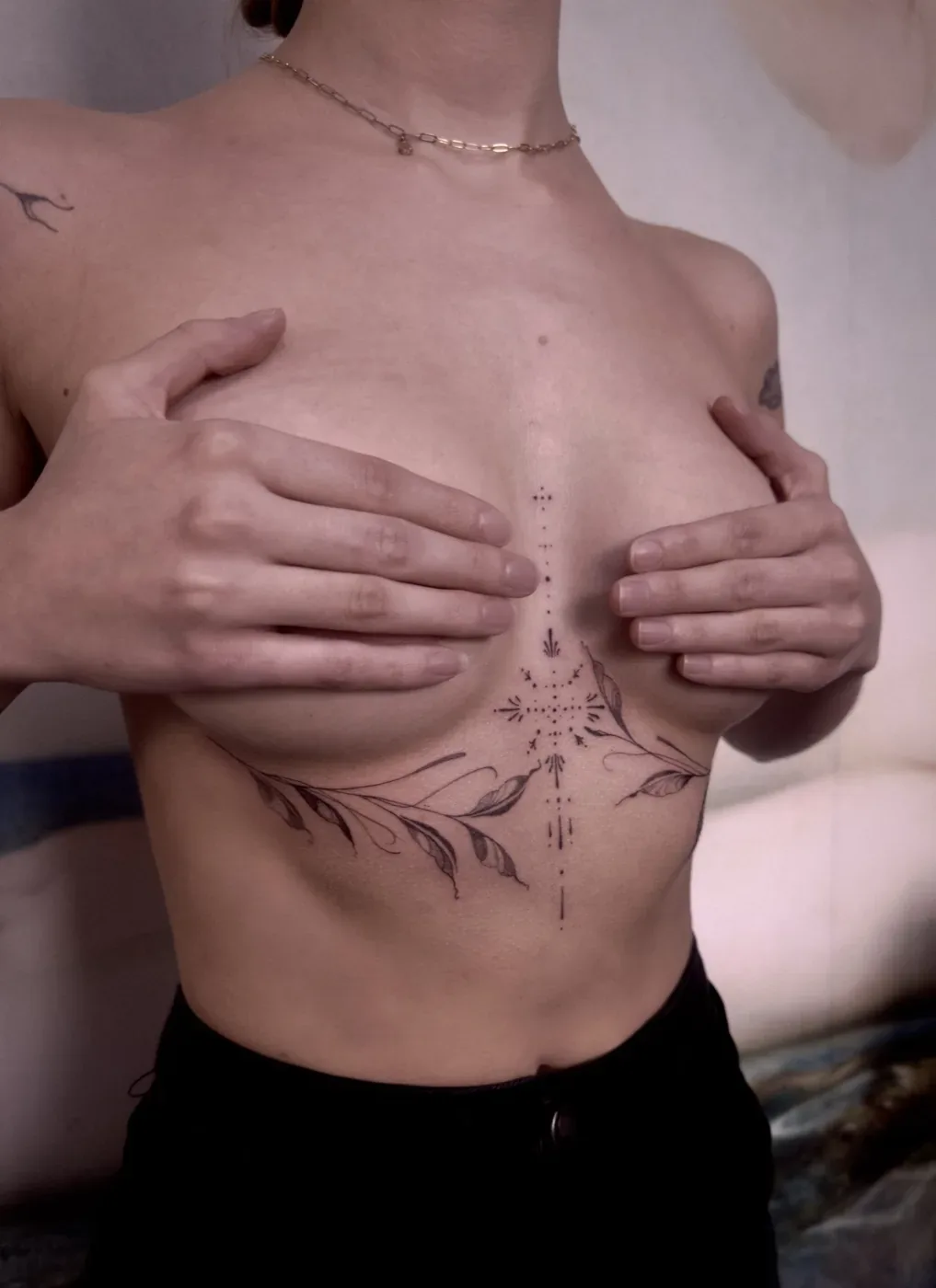
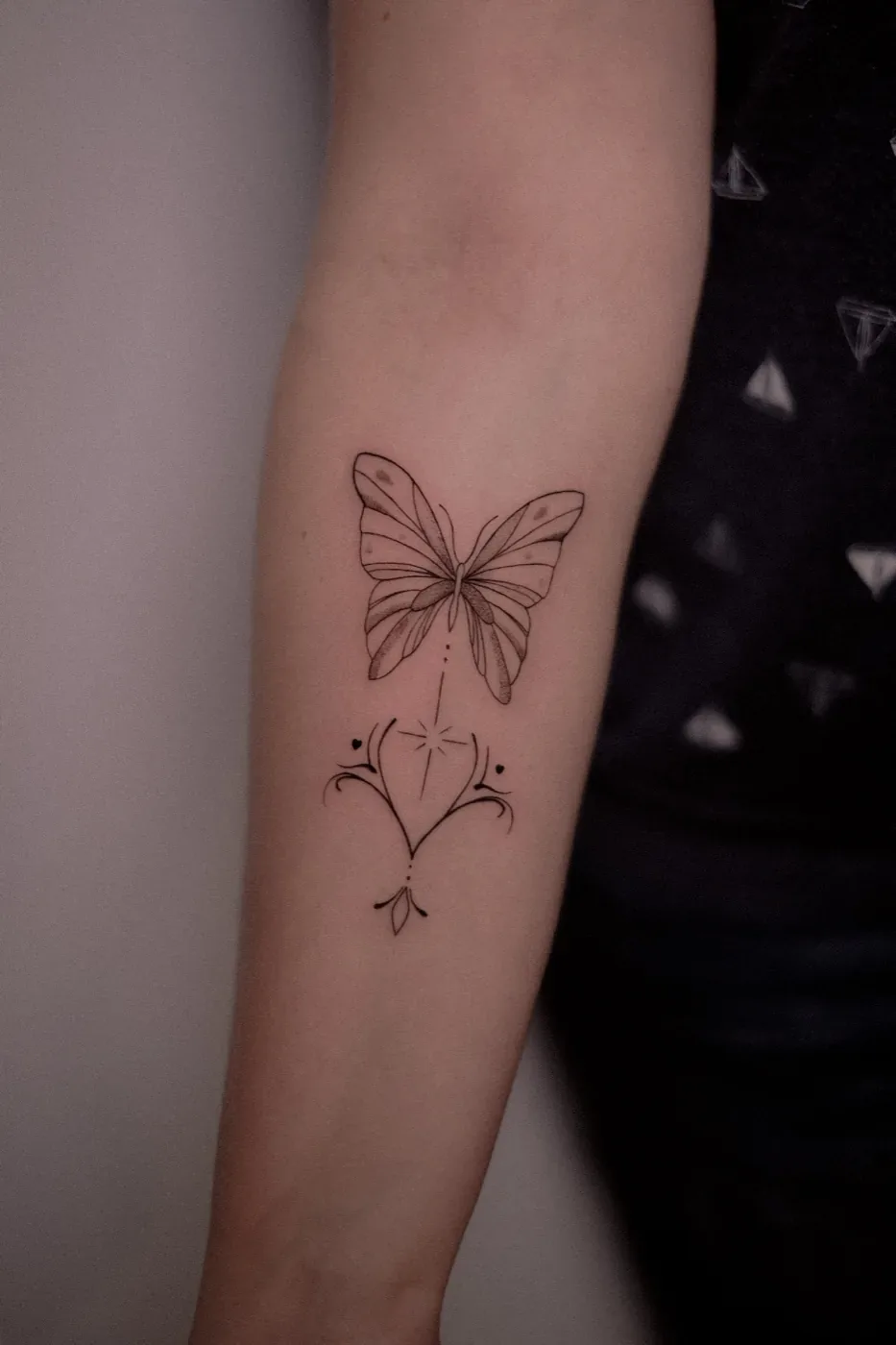
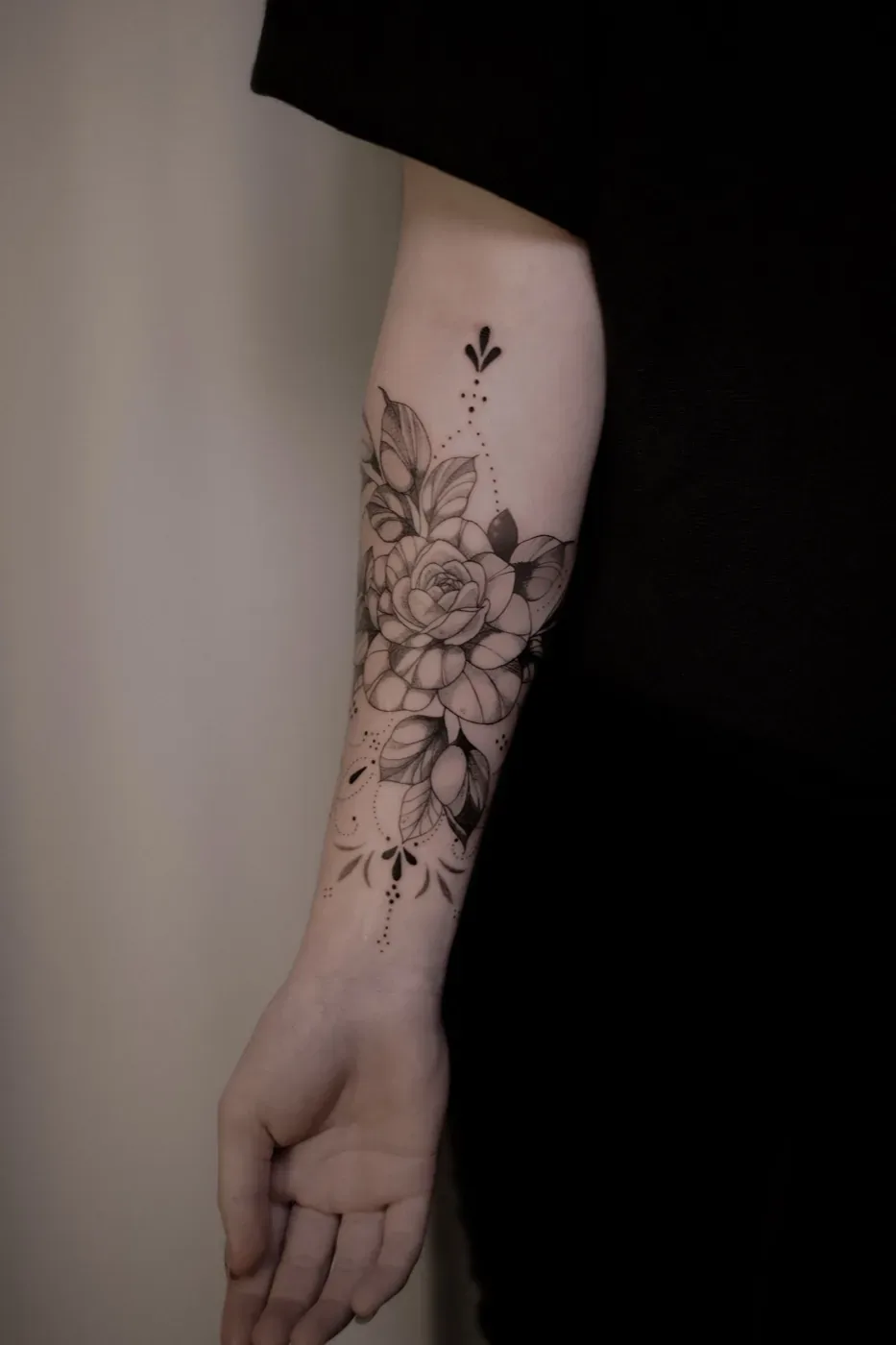
Nastia has been tattooing since 2018. She works in fine line, graphic designs and micro-realism, and her favorite subject is botanical work. Her portfolio includes a mandala with leafy twigs on the sternum, a dotwork rose with ornament on the forearm and a butterfly with an ornamental heart.
In her work, graphic elements are often combined with flowers; see also our page on botanical tattoos.
Send your idea on WhatsApp: a few sentences about the project, the placement on your body, the approximate size in centimeters and your references. If you have your own drawing, attach a photo or scan. We’ll reply with a proposal and available dates. You’ll find Hyper Tattoo Gallery in Wrocław, in the Krzyki district, at ul. Życzliwa 13A.
Portfolio
Team
Co-founder and co-owner of the studio
Hi, my name is Nastia. I tattoo in fine line, graphic and micro-realism styles, with a particular love for botanical pieces, soft motifs and delicate linework.
Questions
Mainly in the weight of the line and the amount of black. Fine line relies on a thin, light stroke, while graphic work brings in stronger outlines, solid fills and shading built from dots, so the design has more contrast. The two styles often blend: a delicate outline can get a graphic ornament or dotwork shading.
Yes, your own drawing is a great starting point. Nastia redraws it for skin: she checks line thickness, spacing and the tiny details that could blur together over time. If the illustration isn't yours, we treat it as inspiration for an original design, not as a ready-made pattern to copy.
Classic graphic work is black, because it rests on the contrast of black against skin, and that kind of tattoo keeps its sharpness the longest. Color can appear as an accent. You make that decision at the sketch stage, when the whole design is already visible.
Nastia sends the sketch a few days before the session, so you can refine it together until the design is settled. Small changes to details are fine on the day of the appointment too. A big change to the design, size or placement right before the session, however, may mean rescheduling.
It depends on the density of detail. A simple symbol with an outline can be small, but a mandala with fine ornament or dotwork needs more room, because lines and dots packed too tightly can merge over the years. Nastia will suggest the smallest size at which the design stays legible.
It's a shading technique built from dots: instead of a smooth blend of tones, the shadow is made of many tiny points, denser where it should be darker. It gives a soft, slightly grainy effect that looks good in ornaments and flower petals. In Nastia's portfolio you can see it in a rose with ornament on the forearm.
That look is one variety of graphic tattooing: a clear split between black and light, like a print from a block. Show us examples you like, and Nastia will judge how to translate them to your placement and size. With large areas of black, careful aftercare is especially important.
The first night under protective pads, in the morning wash with lukewarm water and a gentle soap, then a Second Skin film for 5–7 days. After removing it, apply a thin layer of cream 1–2 times a day, without picking at the flaking skin over the black areas. Once healed, protect the tattoo with an SPF 50+ sunscreen.
Message us on WhatsApp and we will match an artist to your idea.