Healed Tattoos: Why We Show Them and What to Look For
A fresh tattoo always looks good. The skin is taut, the contrast is strong, the color glows, and the studio lighting does the rest. The real test comes later, when the skin has healed, the swelling is gone, and the tattoo starts living on the body in ordinary light. That’s why, when choosing a tattoo artist, it’s worth looking mainly at healed work. Below we explain what it shows and how to read a portfolio.
What a fresh photo hides
A photo taken right after the session shows the tattoo at its most flattering. The area is red and slightly swollen, and the cream or film gives it a shine. In a photo like that, the contrast seems stronger, the lines sharper, and the tonal transitions smoother than they’ll be in everyday light.
This isn’t a criticism of fresh photos. They show the composition and the idea, and often they’re the only photos the artist has right after the work. But they don’t show how the tattoo looks half a year later, when you see it in the bathroom mirror or in the sun on a beach.
What you only see after healing
Once the tattoo has healed, you can see whether the piece was built well:
- whether the contrast holds: dark areas are still dark, and the highlights haven’t turned gray,
- whether tonal transitions are smooth: shadow flows into light without patches or gaps,
- whether the color stayed clean: no muddiness where colors meet,
- whether the details have stayed distinct: small elements are still readable from a normal distance,
- how the tattoo looks in motion: on muscles, in creases, when you turn your arm or leg.
With a cover-up there’s one more question: has the old design started to show through? A fresh photo can’t show that at all.
Examples of healed work
Alex666Cold films and photographs his work after it has fully healed, some of it several months after the session and some several years after. A few examples you can look at in his portfolio:
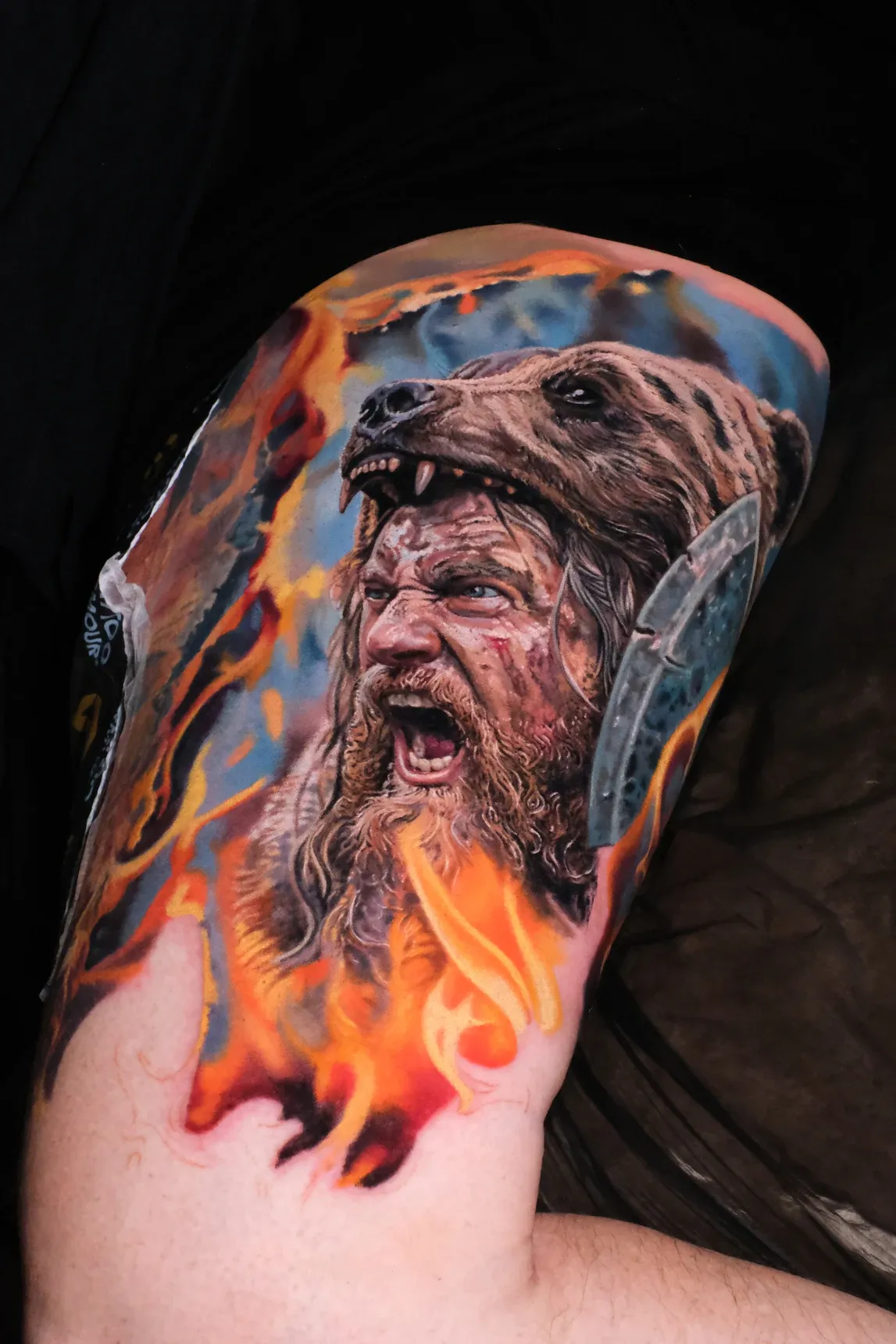
- A berserker in a bear-head hood on a thigh, color realism, photographed 4 months after the session. The scream, the fur, and the steel of the axe are readable, and the colors are still saturated.
- Two giraffe beetles on a forearm, filmed a year after the session. You can see how the multicolored background held up: orange, purple, blue, and turquoise.
- A rhino on an upper arm, a cover-up that’s part of a large color sleeve. The photos were taken 3 years after the session and show that the old tattoo still doesn’t show through.
Photos like these say more than the best shot from the studio. They show not only the artist’s skill, but also how his way of building contrast holds up over time.
How to read a portfolio
A few things to look at before you message an artist:
- Look for captions. A good portfolio says whether a piece is fresh or healed, and ideally how much time has passed since the session.
- Compare the same piece. If you have a fresh photo and a healed photo of one tattoo, set them side by side. The change should be in the shine and redness, not in readability.
- Look for daylight. Photos in natural light, without heavy filters, are more honest than shots under a studio lamp.
- Watch videos. Video shows the tattoo in motion and from different angles, so it’s harder to hide anything in it.
- Look for work in the style you’re interested in. Healed realism will tell you little about how a given artist does fine line, and vice versa.
- Ask directly. If you don’t see healed work in the portfolio, ask for it in your message. It’s a normal question, and there’s nothing rude about it.
Realism and fine line after healing
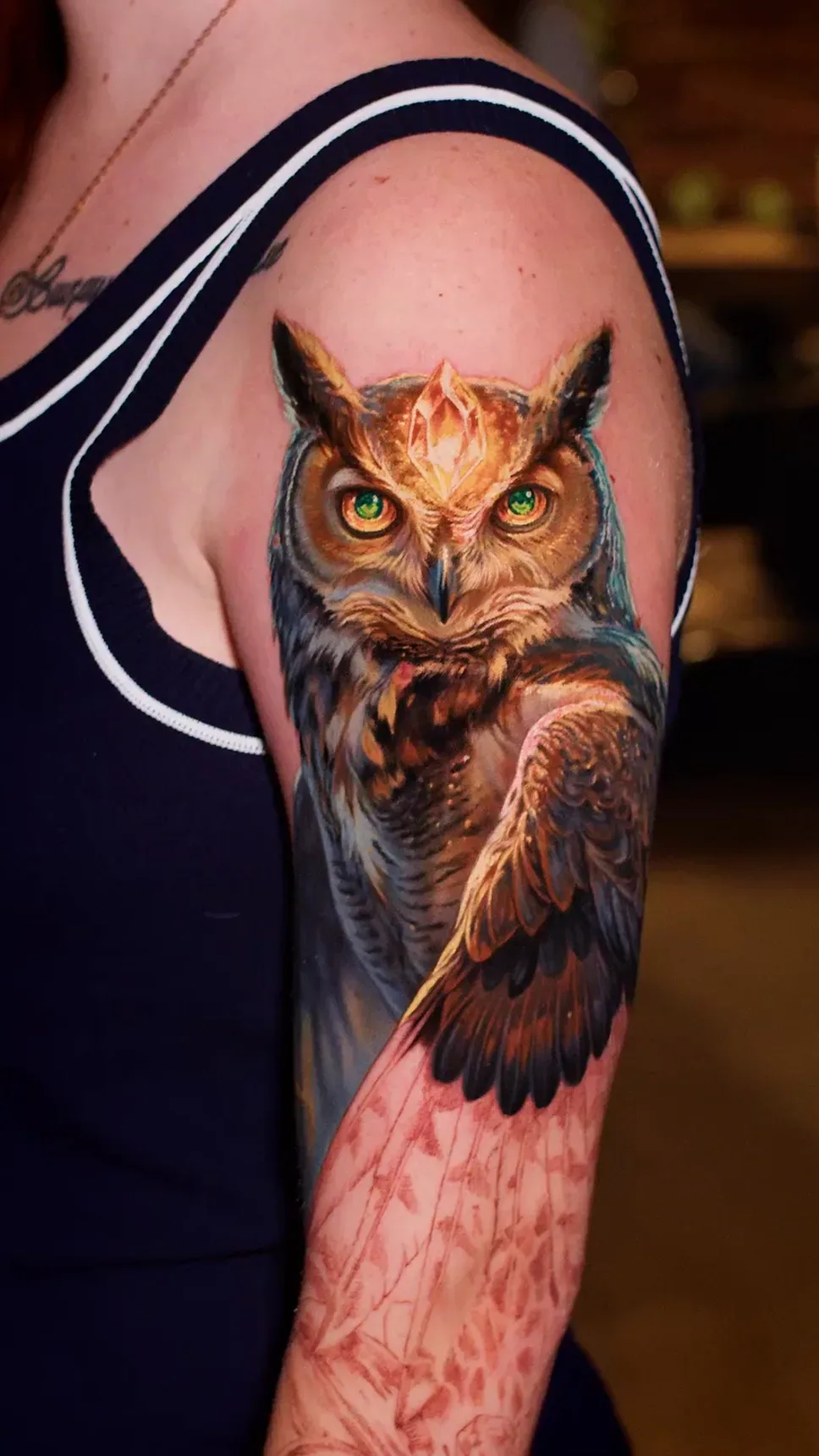
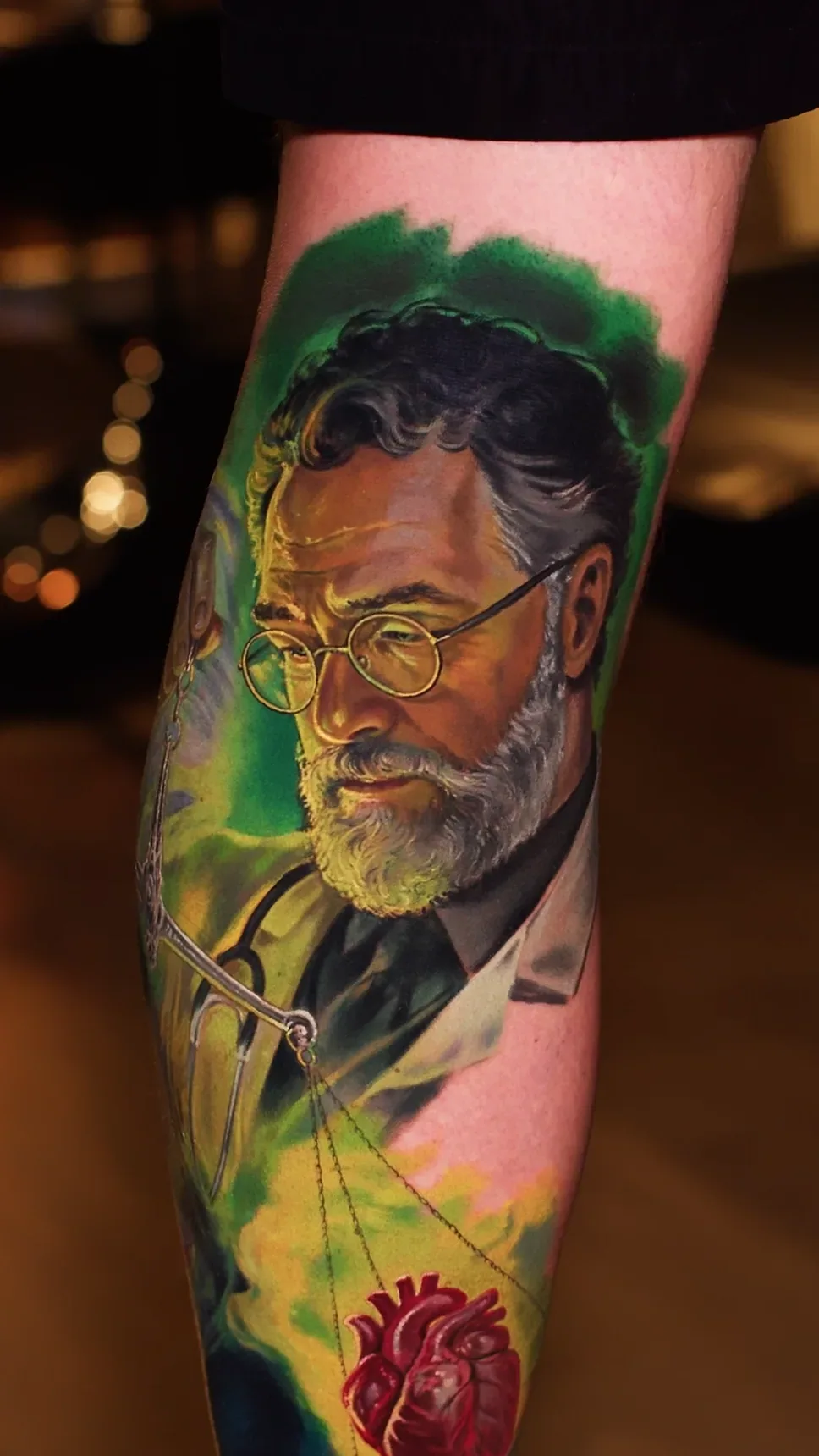
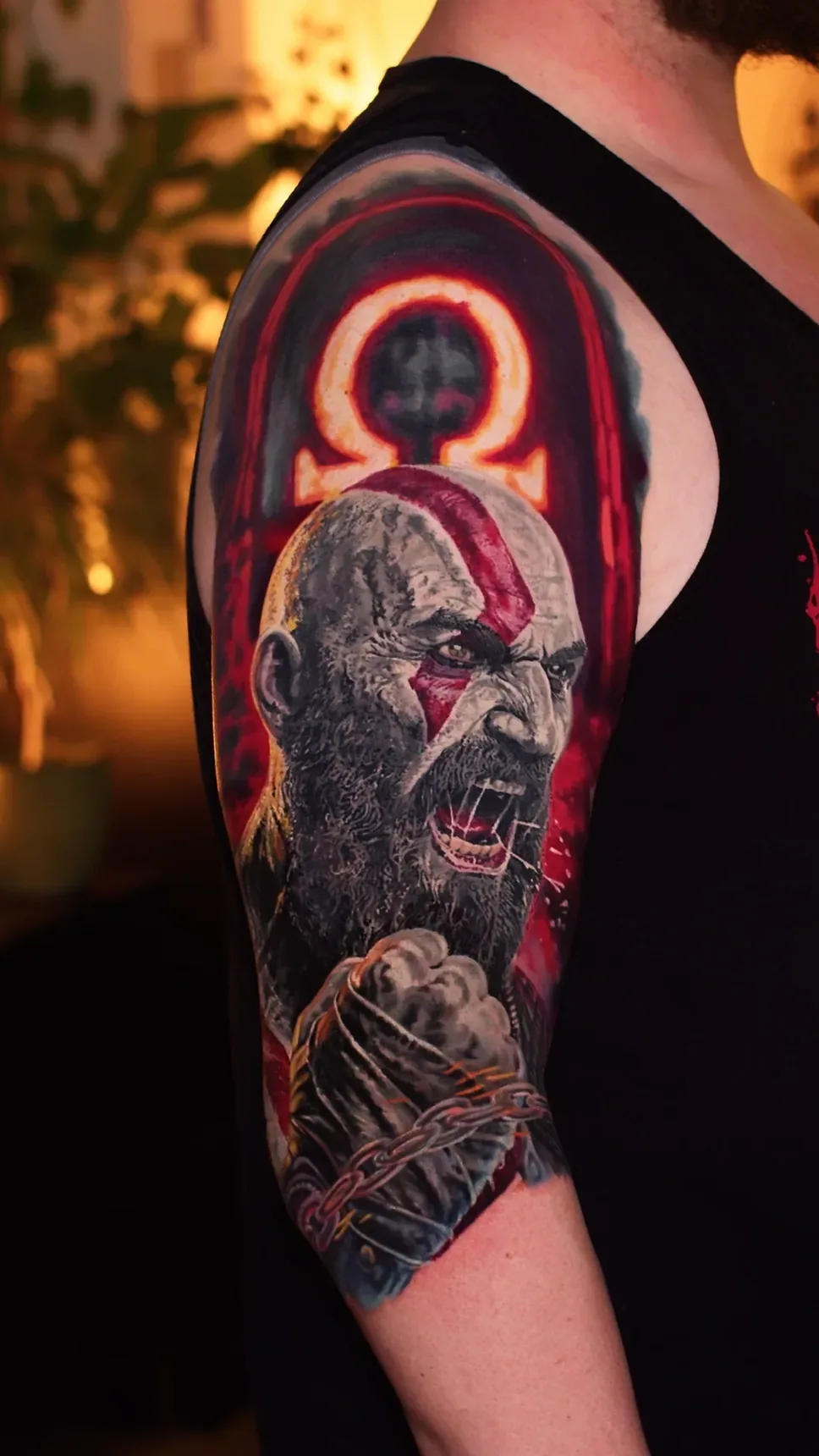
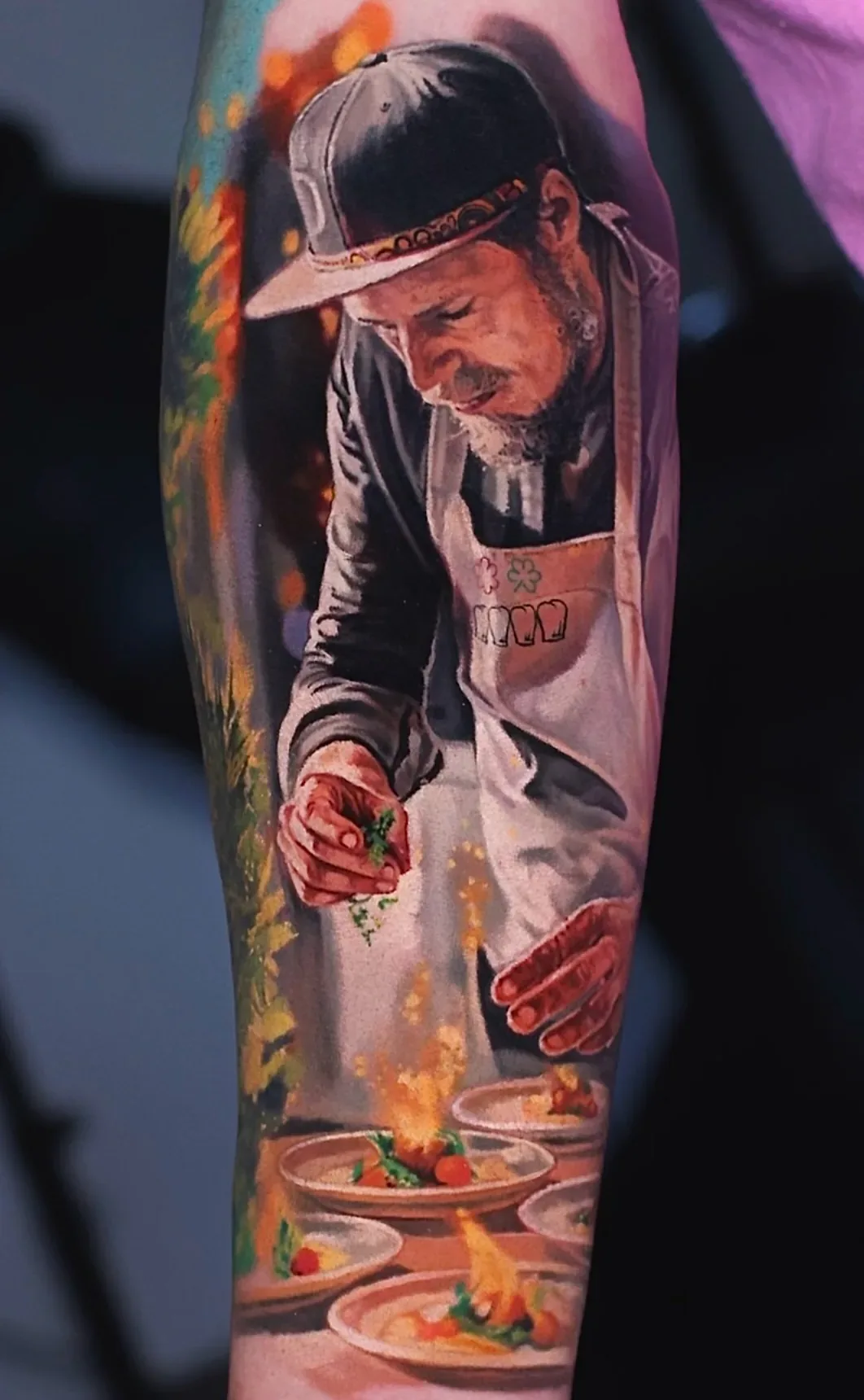
Different styles age differently, so expectations should differ too. In realism, what counts is the structure of values: a clear difference between the darkest and the lightest areas. Well-built contrast keeps a portrait or an animal readable even from a distance. See what Alex’s realism tattoos look like.
Fine line has slightly softer lines after healing than in a fresh photo. That’s natural. What matters is that the lines stay separate from each other and the design stays readable. That’s why, with delicate work, we leave space between the lines in the design and don’t cram in details that could blur together over time.
What’s up to you
Even the best-made tattoo needs aftercare. How a piece looks years later also depends on healing, daily moisturizing, and sun protection. UV radiation speeds up color fading and line blurring more than anything else, so once it has healed, apply SPF 50+ whenever the tattoo is exposed to the sun. The healed work in a portfolio is the result of two people’s effort: the tattoo artist and the person who took care of the tattoo afterward.
What’s next
You’ll find Alex’s healed work in his portfolio, and you can read about how we work in the studio on the About page. If you want your tattoo to look good years from now, start with Tattoo Healing Day by Day. Already have an idea? Message us on WhatsApp or Instagram.