Cover-up: How We Assess an Old Tattoo, What's Coverable
An old tattoo you no longer like doesn’t have to stay with you forever. You don’t always have to remove it with a laser, either. Often it can be covered with a new design, as long as that design is created with what’s already on your skin in mind. At Hyper, cover-ups are handled by Alex666Cold, who has been tattooing since 2009, and difficult reworks are one of his main specialties. Below we describe how we assess an old tattoo before asking for a deposit, and what determines what can be covered.
Photo first, deposit second
We start every cover-up with a photo. Not with a payment and not with a conversation about the new design, but with what’s actually on your skin. Only on that basis do we tell you whether a cover-up makes sense, how big the new design has to be, how many sessions it will take, and whether it’s worth lightening the old tattoo with a laser first.
This order protects both sides. You don’t pay for something that may not work, and we don’t promise a result that can’t be achieved. If someone assures you that “anything is possible” without seeing a single photo, they aren’t planning a cover-up, they’re selling one. A failed rework leaves even more dense pigment in the skin, and each subsequent attempt is harder.
Seven things we check in the photo
- Darkness and saturation. The darker the old tattoo, the darker the parts of the new design that cover it have to be. A faded outline from years ago is easier to cover than heavily saturated black.
- Pigment density. Very dense, solid fills sometimes need 1-2 laser lightening treatments with a specialist. We don’t do laser work ourselves, but we’ll tell you whether it makes sense in your case.
- Size and anatomy. We check which way the composition can grow and how it will sit on the muscles. A forearm offers different possibilities than a shoulder blade or a calf.
- Distribution of light and dark areas. We look for places where the old lines and patches can become the shadow of the new design instead of fighting it.
- The design you want. Not every idea works as a cover. The new design needs depth, texture, and dark areas.
- Skin condition. A fresh tattoo has to heal completely before we assess it. With scars and discoloration, we look at how the composition will sit on the texture of the skin.
- Session plan. Finally, we build a realistic plan: the number of sessions, breaks for healing, and any laser work before we start.
Why color alone isn’t enough
The most common misunderstanding goes like this: an old tattoo can be covered with “stronger color.” In reality, flat color laid over dense black loses its coverage over time, and the old outlines start to show through. What covers effectively is a composition that carries detail and texture: scales, fur, water, flames, the way light breaks. The eye lands on those and stops looking for the old shape.
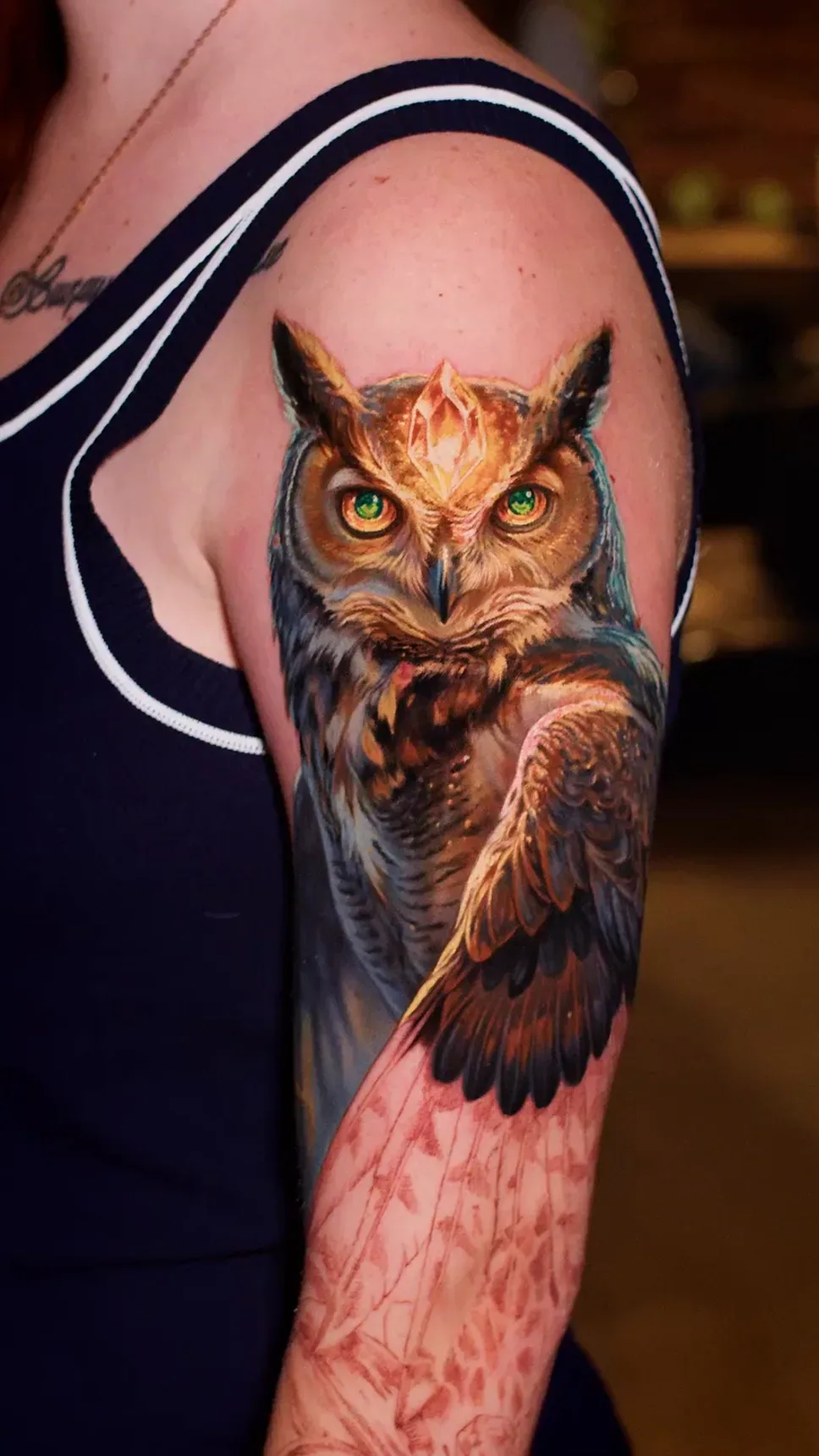
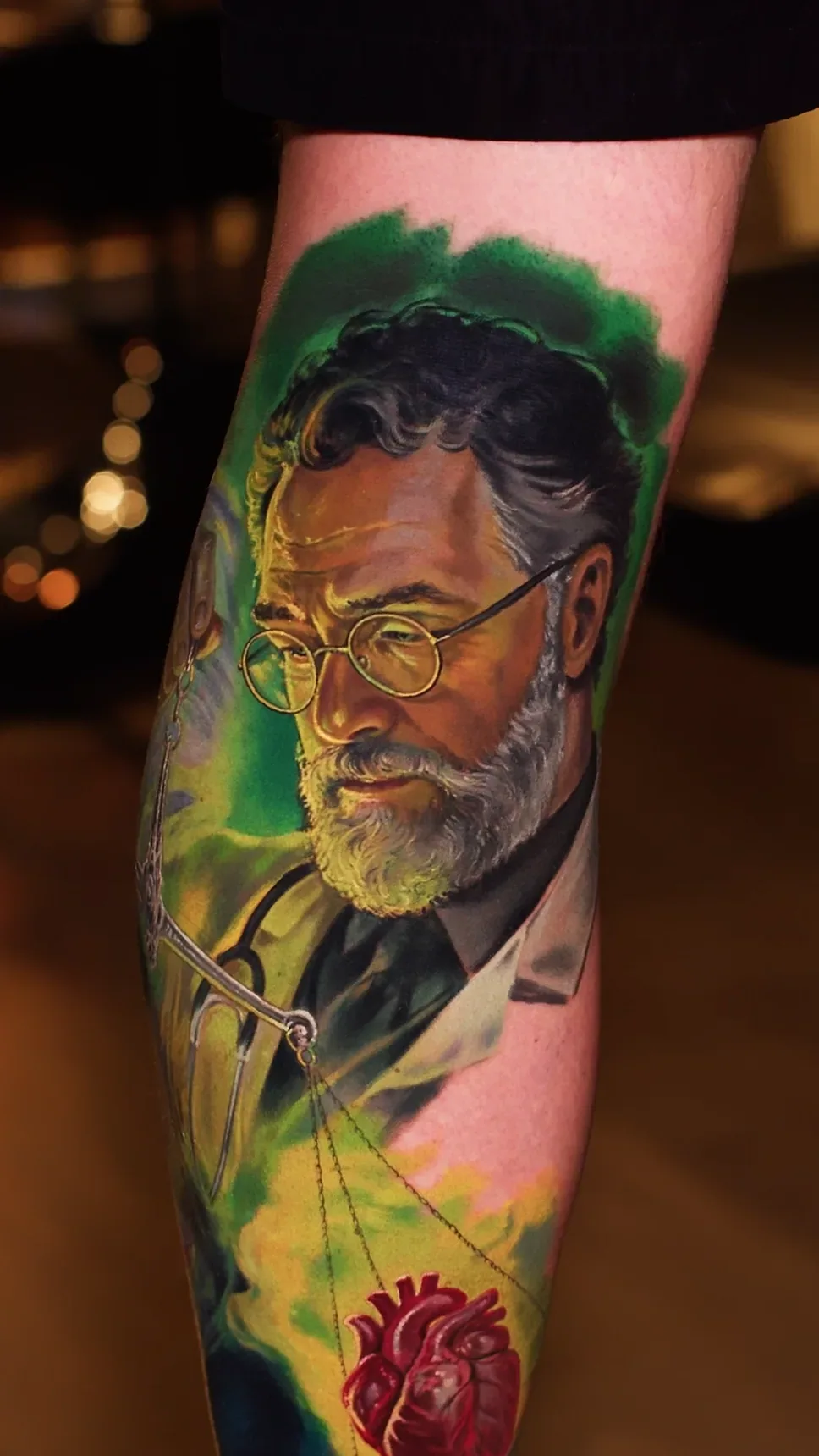
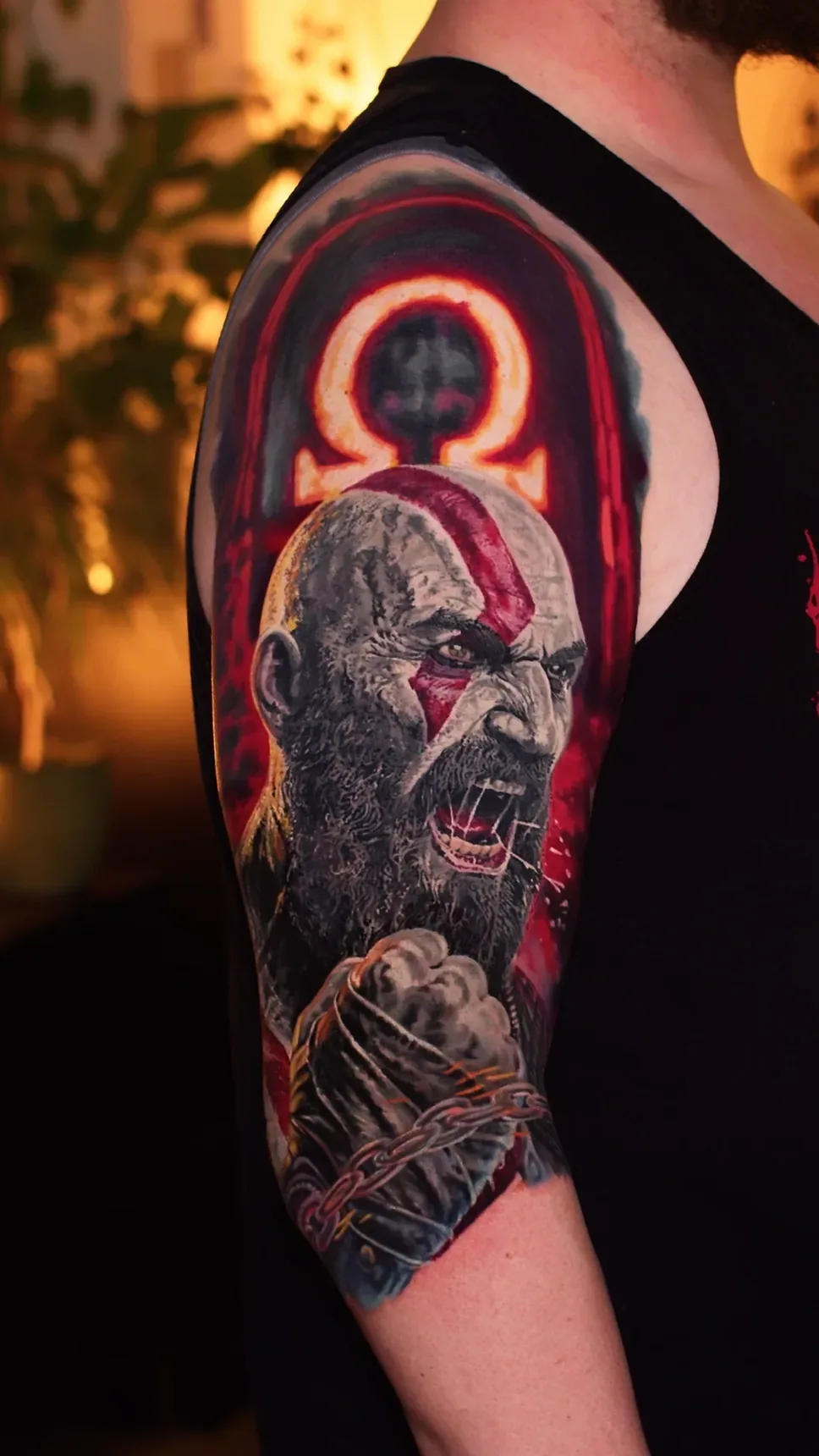
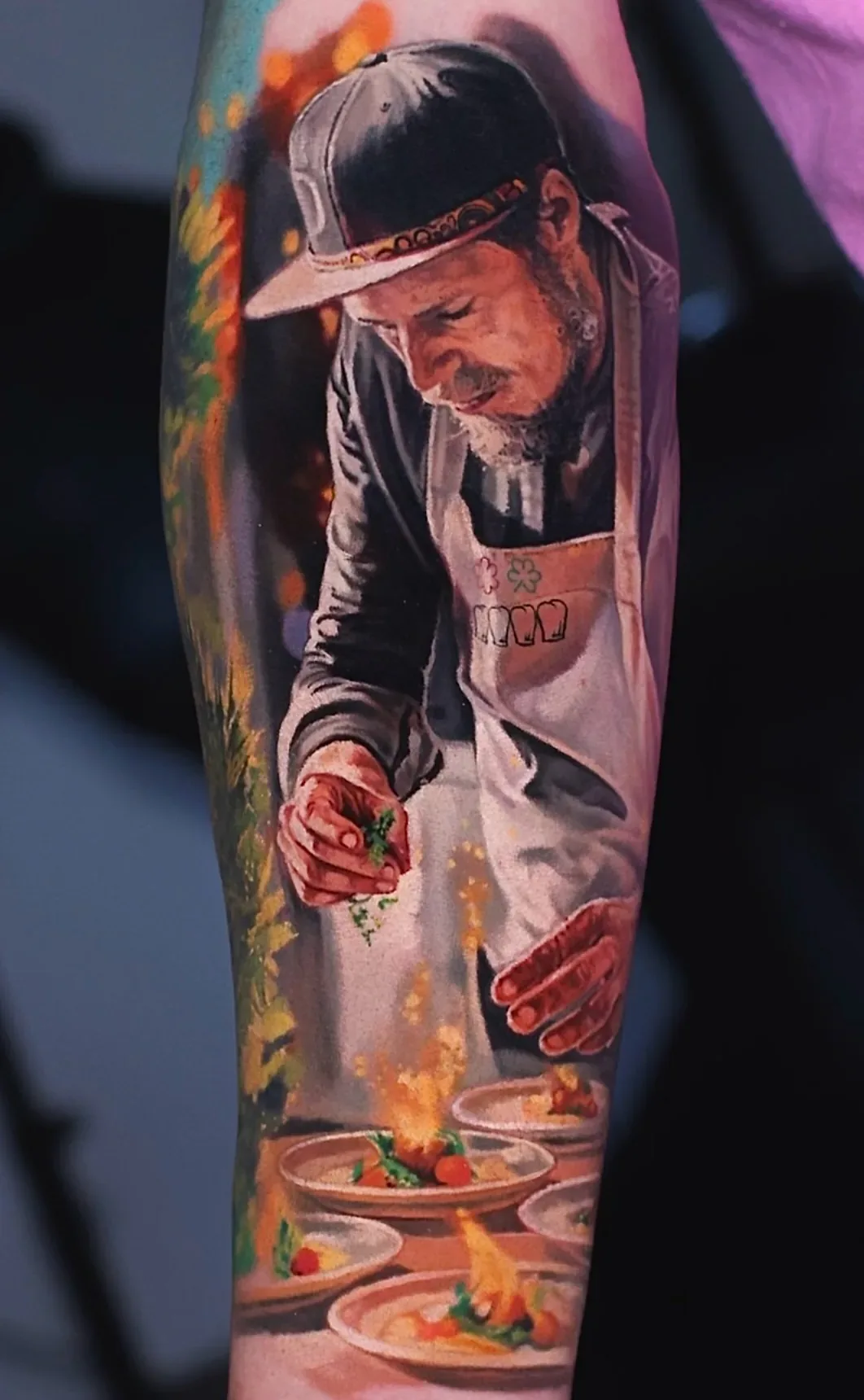
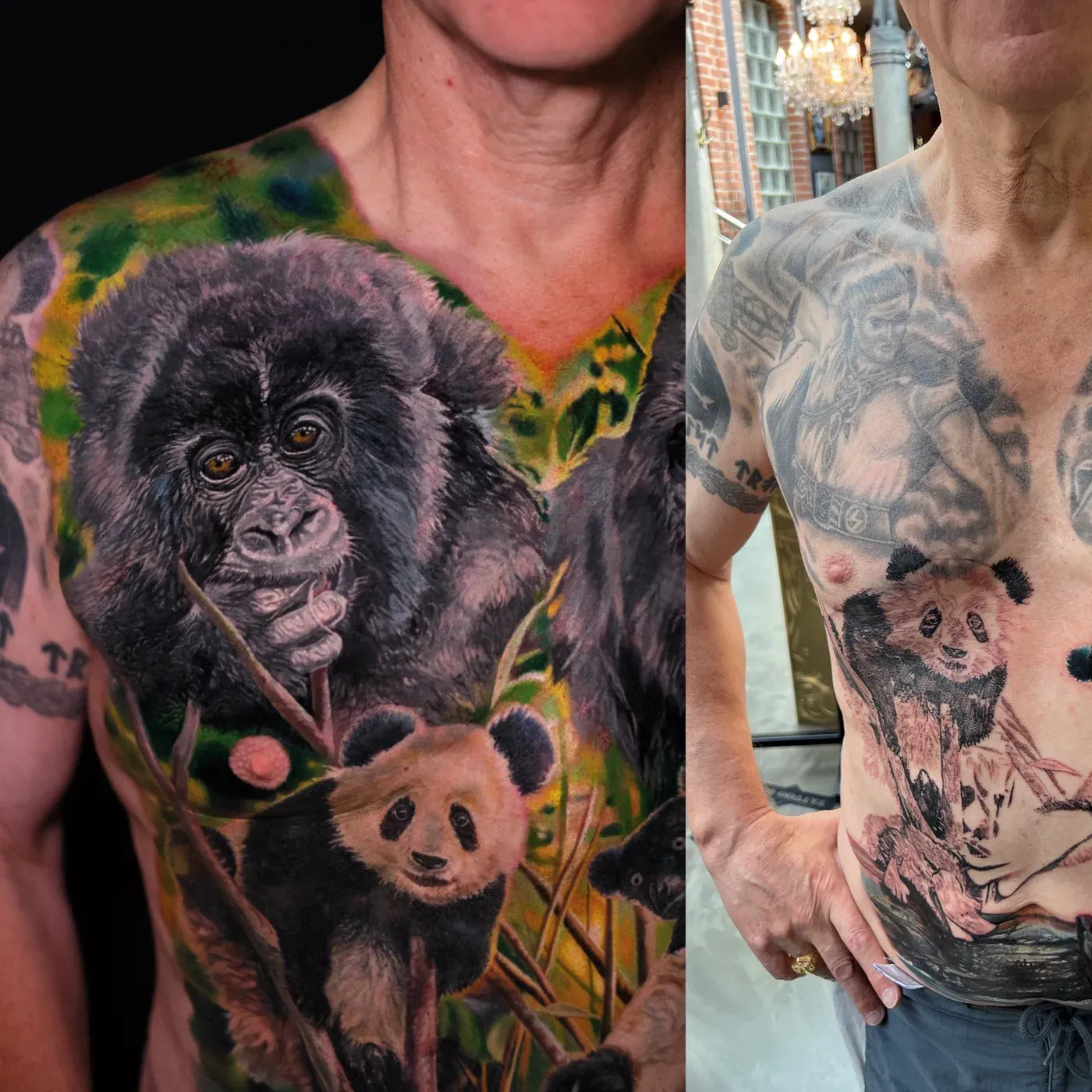
You can see this well in Alex’s portfolio. A black and grey panda on a thigh turned into a dragon in rough water: 3 sessions, one touch-up, no laser. The most densely worked water sits exactly where the panda had its darkest patches. And a solid black tribal on an upper arm disappeared under a realistic skull with an octopus, also in 3 sessions and without a laser. Both are in Alex’s portfolio.
That’s why, with a cover-up, ask not only whether the old tattoo can be covered, but how. A good answer talks about values, composition, and texture, not just about it “being darker.”
What can be covered and what needs another route
Alex takes on cases where you often hear “it can’t be done”: dense, old black, tattoos from 10-20 years ago with blurred lines, names and dates, failed portraits, and unfinished projects. He also covers scars and discoloration, adjusting the composition to the texture of the skin.
There are limits, though, and we state them plainly:
- a light, delicate design won’t cover black, which is why fine line isn’t suited to a cover-up,
- a very saturated tattoo sometimes has to be lightened with a laser first, which usually adds 2-3 months to the whole plan,
- a fresh tattoo is assessed only after it has fully healed, because before that you can’t see how it really looks.
If you’re dreaming of something light and airy and the old tattoo is dark and dense, you’ll hear it from us before the deposit, not on the day of the session.
Size and number of sessions
A cover-up is almost always larger and darker than the tattoo it covers. It needs room for detail where the old design gets lost. Sometimes that means an armband turns into a full sleeve. We give you the minimum size after looking at the photo, before you book a date.
A small cover-up, roughly 10-15 cm, usually wraps up in 2 sessions, and larger compositions take 3-6 sessions. Alex works in full-day sessions of at least 6 hours, with healing breaks between appointments. If a laser is needed before the cover-up, a few months of waiting are added to the plan. Be cautious about promises that a large, dark tattoo will disappear in one session.
The best way to see how a cover-up looks years later is to check healed work. A rhino on an upper arm is a cover-up photographed 3 years after the session.
How to take a photo for assessment
- in daylight, without flash and without filters,
- straight on rather than at an angle, plus one or two shots from the side,
- with the approximate size in centimeters,
- with a note on how long ago the tattoo was done and whether it has already been lightened with a laser,
- with a few references of designs you like.
The photo has to be honest. A nice shot with a filter hides exactly what matters most in the assessment: the true darkness of the old pigment.
What’s next
Send a photo on WhatsApp or Instagram and Alex will assess what can be done. We describe the process step by step on the Cover-up in Wrocław page, and what the quote depends on is explained in What Affects Tattoo Price. You’ll find more reworks in Alex’s portfolio.